Protein Quality 101 - Why DIAAS Scores Matter
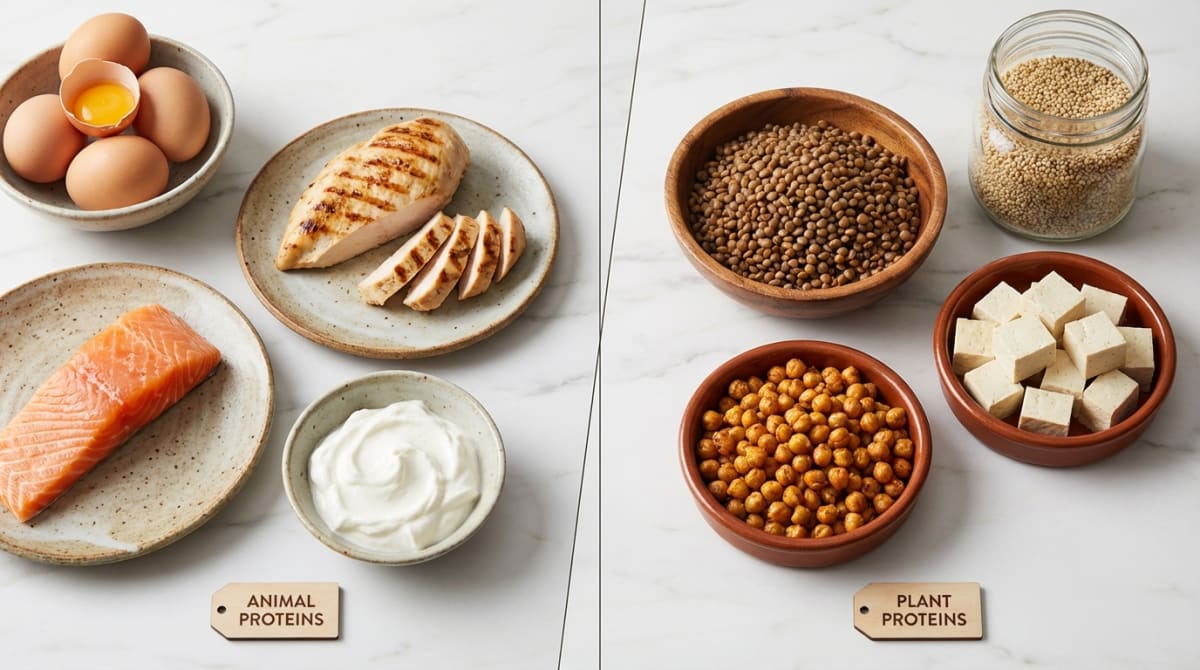
You've probably heard that you need to eat more protein. But here's what nobody's telling you: not all protein is created equal. The protein in a chicken breast works differently in your body than the protein in beans. And for women over 40 trying to preserve muscle during menopause, understanding protein quality could be the missing piece of your nutrition puzzle.
Let's break down what DIAAS scores mean and why they matter for you.
What Is DIAAS (And Why Should You Care)?
DIAAS stands for Digestible Indispensable Amino Acid Score. It's the gold standard for measuring protein quality - how well your body can actually use the protein you eat.
Think of it this way: if you eat 30g of protein, how much of that can your body actually absorb and use to build muscle, make hormones, and support your health? That's what DIAAS measures.
A score of 100 means your body can use virtually all of the amino acids in that protein. Lower scores mean some amino acids aren't as available or are limiting.
DIAAS Scores for Common Proteins
Here's where it gets interesting. Research analyzing 150+ protein sources found dramatic differences:
High-Quality Proteins (DIAAS 90-113%)
- Eggs: 113% (the reference standard)
- Whey protein: 109%
- Chicken breast: 108%
- Beef: 102%
- Fish (salmon, tuna): 100%
- Greek yogurt: 100%
- Cottage cheese: 98%
Moderate-Quality Proteins (DIAAS 50-80%)
- Chickpeas: 67%
- Quinoa: 64%
- Tofu: 62%
- Black beans: 58%
- Lentils: 52%
- Peas: 50%
Lower-Quality Proteins (DIAAS 40-50%)
- Oats: 43%
- Rice: 42%
- Wheat bread: 40%
What This Means for Women Over 40
Here's the practical reality: if you're eating 100g of protein per day primarily from lower-quality sources, your body might only be able to use the equivalent of 50-60g for muscle-building purposes.
During menopause, when you're already fighting muscle loss (sarcopenia) and dealing with increased protein needs, this matters a lot.
But - and this is important - it doesn't mean you need to eat only animal proteins. Here's what the science actually shows:
The Good News About Plant Proteins
1. Combining plants boosts quality dramatically
When you eat lentils (low in methionine, high in lysine) with quinoa or rice (high in methionine, low in lysine), the combined DIAAS reaches 90%+. Your body doesn't care that they came from different foods.
2. You don't need to combine at every meal
Your body pools amino acids over 24-48 hours. As long as you're getting variety throughout the day, you'll meet your amino acid needs.
3. Soy is nearly as good as animal protein
Tofu, tempeh, and edamame have DIAAS scores of 90-100% when processed properly. If you're plant-based, soy is your best friend.
Practical Strategies for High-Quality Protein
Based on the research, here's how to optimize your protein quality:
If you eat animal products:
- Prioritize eggs, fish, poultry, and dairy - they're the highest quality
- Greek yogurt and cottage cheese are protein powerhouses
- Even moderate portions deliver highly usable protein
If you're plant-based or plant-forward:
- Include soy products regularly (tofu, tempeh, edamame)
- Combine legumes with grains at some point during the day
- Consider plant-based protein powders (pea + rice blend = complete)
- You may need 10-20% more total protein to compensate for lower absorption
For everyone:
- Aim for variety - different protein sources have different amino acid profiles
- Don't stress about perfect combinations at every meal
- Focus on getting 25-30g of protein at each meal from quality sources
A Word About Protein Powders
If you're struggling to meet protein needs, quality protein powders can help:
- Whey protein: DIAAS 109% - excellent for muscle building
- Casein: DIAAS 100% - slower digesting, great before bed
- Pea + rice blend: DIAAS 90%+ - best plant option
- Soy protein isolate: DIAAS 90%+ - complete plant protein
Look for products with minimal additives and third-party testing.
Key Takeaways
- Protein quality (DIAAS) measures how well your body can use the protein you eat
- Animal proteins score highest (90-113%), but plant proteins can work with strategic combining
- Eggs, whey, chicken, and fish are the highest-quality proteins
- Combining legumes + grains boosts plant protein quality to 90%+
- For women over 40, prioritizing protein quality helps maximize muscle preservation
- Aim for 25-30g of high-quality protein at each meal
The bottom line? Quality matters, but it's not an all-or-nothing situation. Whether you eat animal products, are fully plant-based, or somewhere in between, understanding protein quality helps you make smarter choices for your body during menopause.
Sources:
1. Rutherfurd, S.M., Moughan, P.J., et al. (2024). Protein quality assessment using DIAAS methodology. Nutrients.
2. Churchward-Venne, T.A., et al. (2024). Leucine content and muscle protein synthesis. Amino Acids.
3. Neufingerl, N., Eilander, A., et al. (2024). Plant-based protein adequacy for post-menopausal women. AJCN.